
From Uldum’s perspective, Sweden is not a distant export market. It’s right on our doorstep. Several of our biggest customers are located on the other side of the Øresund, and many of them have been working with us for years.
This collaboration has taught us what Swedish buyers expect from a subcontractor. They are thorough. They want to see the documentation and meet the specialists before the first order is placed. Once the partnership is established, they expect it to last for many years.
Swedish companies choose their surface treatment suppliers on the basis of proven quality, reliability of supply, technical advice and sustainability. Chem-Tec Plating has been ISO 9001-certified since 2009 and offers PVD coating alongside traditional electroplating and chemical processes at the same site in Uldum, under a single quality management system and with a single dedicated contact person.
Which Swedish sectors does Chem-Tec Plating work with?
We do not mention our clients by name. Discretion is part of what they pay for. However, we can tell you where the Swedish projects come from.
A large proportion comes from manufacturers of springs, strip-formed parts and precision components. Here, the surface must withstand mechanical wear whilst meeting tight tolerances. We treat components for the automotive industry, where customers pay for a finish that makes no compromises. Medical technology is also a significant sector, and here traceability is just as important as the coating itself. The remainder is divided between professional audio equipment, photochemical etching, automatic turning, injection moulding and consumer products for leisure use.
The components are often small, and faults can prove costly. If the coating on a spring is too thin, the fault rarely becomes apparent straight away. It only becomes apparent to the customer’s customer, perhaps a year later.
Several of the Swedish groups we work for also have subsidiaries in Denmark and the Baltic states, and we supply several of them. The same specifications and the same quality requirements can therefore apply to a component across national borders.
Why do Swedish buyers place such a high value on documented quality?
The Swedish manufacturing industry has developed with the major car and lorry manufacturers as its customers, and these companies audit and assess their suppliers time and time again. This culture is deeply ingrained in the mindset of procurement professionals right down through the supply chain, including in smaller companies.
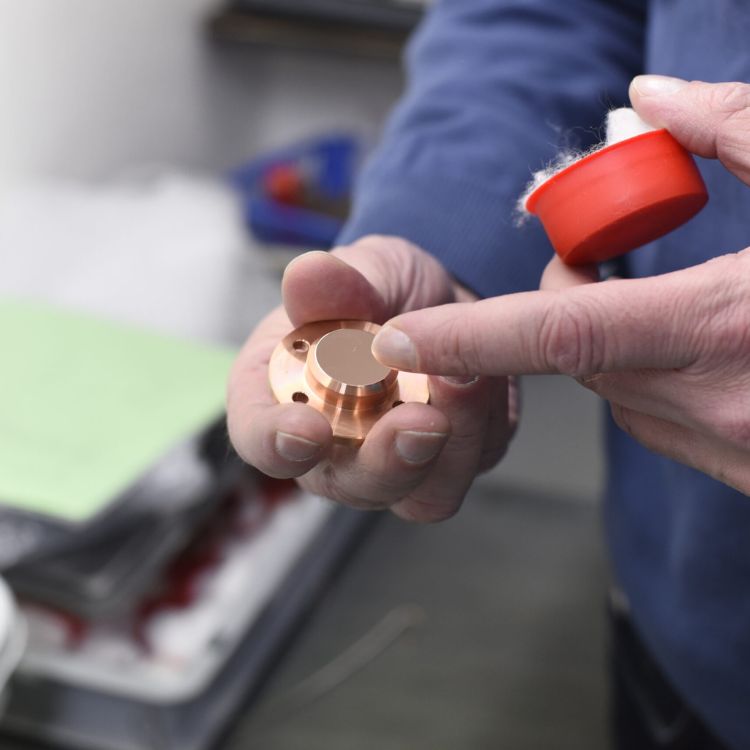
For us, quality work begins with our staff. All new recruits receive thorough training in our processes, and there are written instructions for every single process. Every morning, the quality, production, development and sales teams meet to review current issues, so that no problem is left waiting in an inbox.
If an operator notices anything about the items that could compromise the processing, we contact the customer before proceeding. If an error does occur, the complaint is handled by the quality department. All data is stored to ensure that the same error does not recur.
The framework is ISO 9001. We have been certified since 2009 and were upgraded to ISO 9001:2015 in 2018. For a Swedish buyer, the certificate is the ticket to entry. What determines the collaboration is how the system performs on the day something goes wrong.
What does security of supply mean when a supplier suddenly drops out?
In March 2000, a lightning strike caused a fire at Philips’ chip factory in Albuquerque, New Mexico. The fire lasted about ten minutes, but the smoke and water used to extinguish it disrupted production for months. The factory supplied chips to both Nokia – which, incidentally, had been a customer of ours for many years – and Ericsson.
Nokia quickly identified the problem, redesigned parts of the chips and secured capacity from other suppliers. Ericsson had no alternative supplier. This resulted in a loss of sales of around 400 million dollars, and the following year Ericsson withdrew from in-house production of mobile phones.
Ericsson subsequently developed a systematic approach to managing supplier risk, which has since been described in academic research and is used in teaching at business schools. Swedish industry has therefore learnt this lesson more thoroughly than most.
The mechanism is the same, regardless of whether the missing part is a chip or a spring costing just a few øre. When it doesn’t arrive, the assembly line comes to a standstill.
The author Nassim Nicholas Taleb makes a point that is relevant here. Redundancy looks like a waste in a spreadsheet, right up until the day you find yourself needing it. For a procurement officer, this means having a second qualified supplier who is already familiar with the drawings and can take over without the need for a new round of approvals.
We can take on that role, both as your main supplier and as the safety net you won’t want to be without the day a factory comes to a standstill.
Why is it an advantage to have PVD and electroplating in the same place?
Because the best finishes often require both.
A galvanic or chemical undercoat provides corrosion protection. A PVD top coat of 0.1 to 4.0 µm provides the hardness and the final finish without altering the component’s tolerances. For most companies, this combination means two factories, transport between them and two quality systems that can point the finger at each other when something goes wrong.
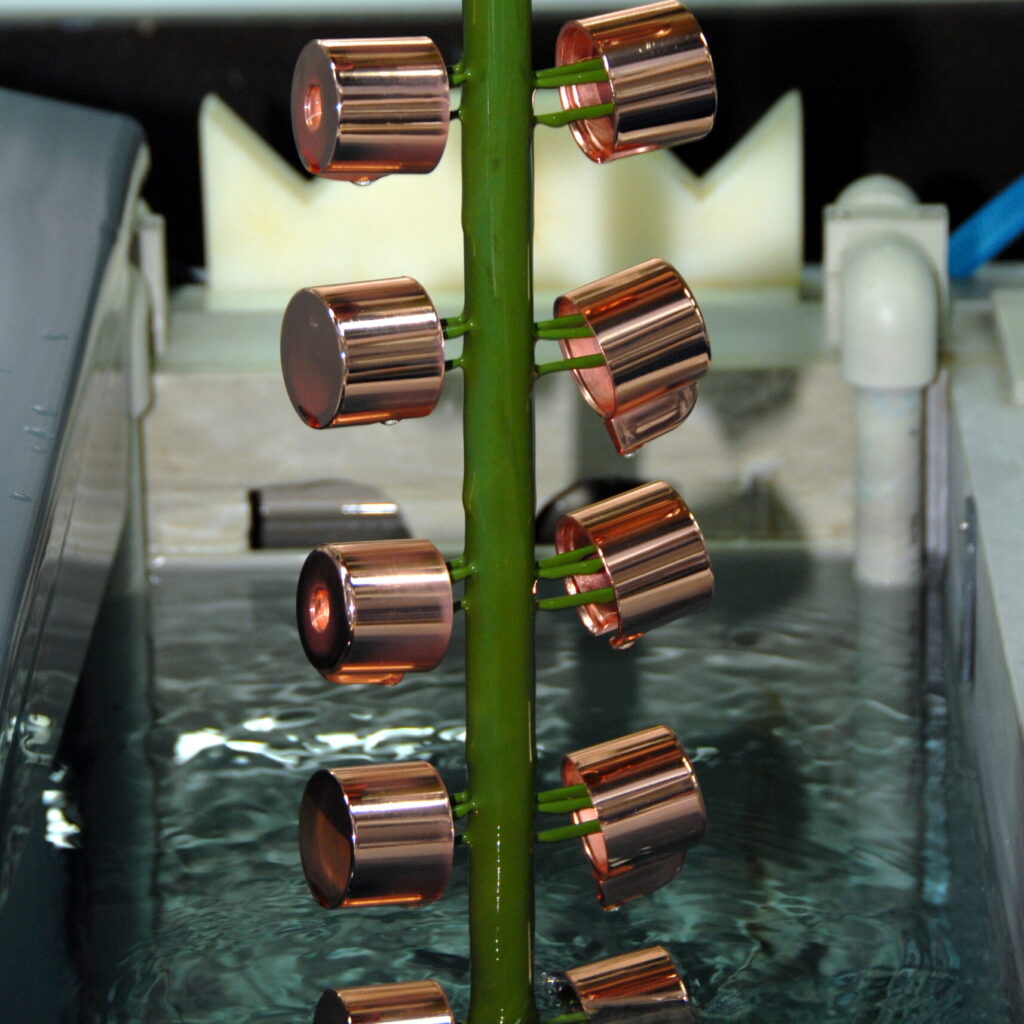
At our facility, everything takes place in the same building. Our electroplating range includes, amongst other things, nickel, pearlescent nickel, black nickel, anthracite nickel, copper, tin, tin-nickel, silver, gold and chrome plating. In addition, we offer chemical nickel, chemical nickel with PTFE and black chemical nickel, and we also process strips on a roll-to-roll basis. PVD coatings are available in chrome, black chrome, gold, brass and copper, in a high-gloss or matt finish following glass blasting.
For a Swedish buyer, this means one supplier to audit, one specification to maintain and one person to ring.
What do Swedish customers expect from technical advice?
Like Denmark, Sweden ranks right at the bottom of Geert Hofstede’s measurements of the distance between managers and employees. In practice, a Swedish design engineer expects to speak directly to the person who knows the process, rather than to an intermediary who first has to run it through the organisation.
That suits us fine. Our specialists are happy to get involved right from the design stage, whilst it is still inexpensive to make changes. A sharp edge that should have a radius, or a thread that needs to be masked, costs next to nothing to correct in a draft. In a complaint report, it costs considerably more.
Swedish customers are also used to making decisions collectively. It may take a little longer for the order to come through, but when it does, the whole organisation is behind it. We have learnt to appreciate that pace.
How does Chem-Tec Plating demonstrate its sustainability?
Sustainability has gone from being a preference to being a requirement in Swedish supplier agreements. Under the EU’s Corporate Sustainability Reporting Directive (CSRD), many large companies are required to report on their environmental impact throughout the value chain, and are therefore requesting data from their subcontractors.
In 2025, we discontinued our electroplating production of black chrome and replaced it with PVD, which does not use hexavalent chromium. At the same time, we will publish an annual environmental report, no later than 2025, which you can find on our website.
The centralised location also helps. When undercoating and PVD top coating take place at the same site, a transport journey between two suppliers is eliminated from the component’s carbon footprint. The benefit is modest, but it is measurable, and these are precisely the sort of figures a Swedish purchaser can include in their report.
How to get started
The quickest way to find out whether we can meet your requirements is to send us a drawing and a specification. Our specialists will get back to you with an assessment of which process they would choose and why. This also applies if you are looking for a second supplier for processes that you currently have carried out elsewhere. Write to info@chemtec.dk or call +45 75 67 92 92.
 EN
EN  DK
DK  DE
DE